
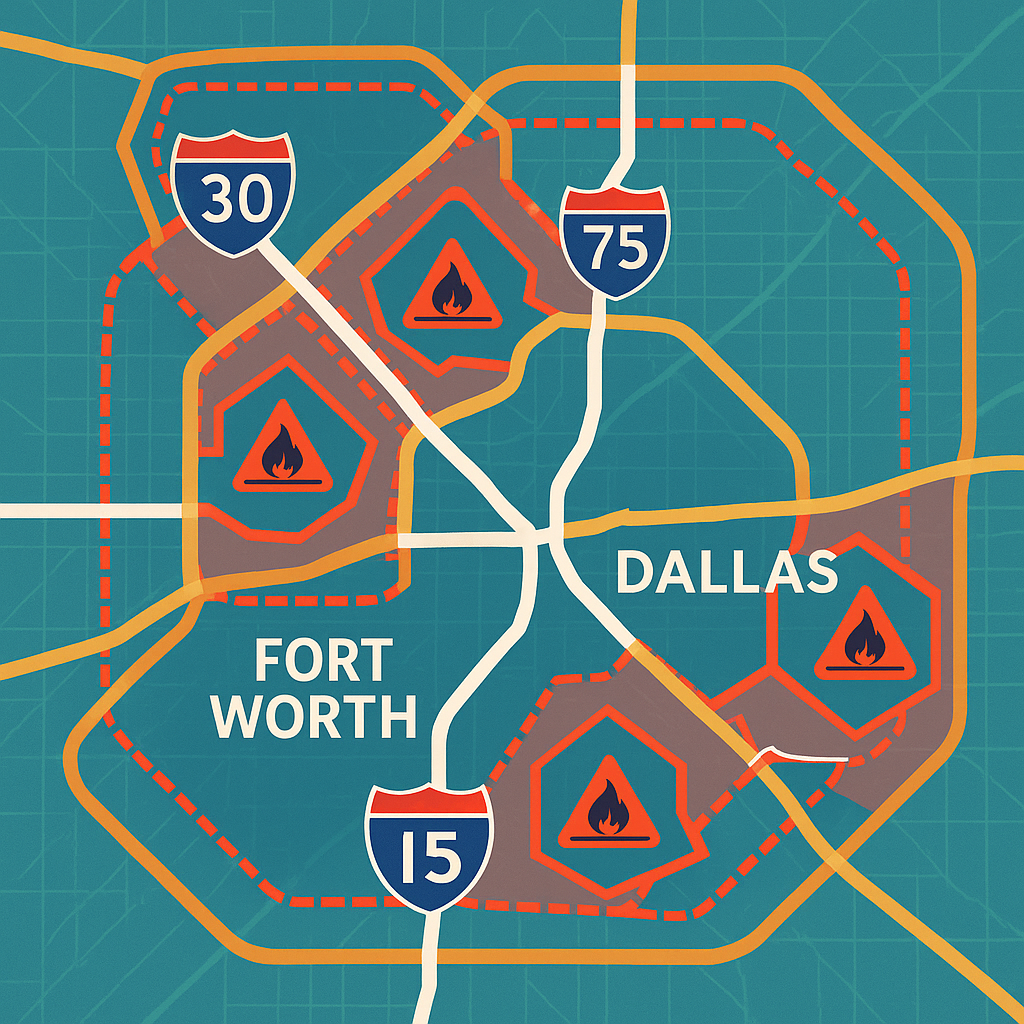
For any carrier that is operating in the Dallas–Fort Worth (DFW) area, following the hazmat rules (i.e., rules about dangerous materials) is a very important task. The DFW region has a highly congested area of highways, industrial spaces, and chemical facilities, and it is thus the necessity for strict supervision at every stage of the supply chain. Through this, you will be able to catch the most important points of Dallas hazmat compliance, potential advanced tracking regulatory solutions, and the modern technologies introduced by these tracking software — from sensor logs to documentation automation — which will keep your processing both efficient and ready for audits.
Why Dallas Hazmat Compliance Matters
Dallas has a very active petrochemical and manufacturing industry. Fines, operational delays, environmental damage, or public safety risks are caused by improper administration. In addition, agencies such as the Federal Motor Carrier Safety Administration (FMCSA) and the Texas Commission on Environmental Quality (TCEQ) are continuously changing their requirements, so it is essential to keep up with the regulatory updates. The comprehensive tracking regulatory solution that you should have is to ensure that I‑30, I‑35, US‑75, or any other arteries in the DFW area are loaded with chemical containers that are monitored, documented, and approved.
Key Regulatory Bodies & Requirements
| Agency | Primary Focus |
| FMCSA | Hours‑of‑Service, vehicle maintenance, driver qualifications (FMCSA regs) |
| TCEQ | Hazardous Materials Registration, TCEQ permit, spill reporting |
| Local DOT (Dallas County) | Route restrictions, route approval, local ordinances |
- FMCSA Regs: Includes driver training, vehicle inspection, and placard requirements.
- TCEQ Permit: Requires hazmat registration, provides emergency response information, and needs to be renewed every year.
- Route Approval: In some Dallas areas, especially near schools or hospitals, it is necessary to get pre‑approved routes.
Core Features of a Tracking Regulatory Solution

When looking for a tracking regulatory solution for your DFW chemical transport, these are the door key functionalities that show that you have made the right choice:
- Audit Trails
It would be best to track any load movement from pickup time to final delivery log automatically. Detailed and time‑stamped records will be very helpful during FMCSA audits and in internal reviews. - Documentation Automation
Create bills of lading, TCEQ manifests, and driver safety checklists directly without entering the manual data, which can be a potential source of errors. - Placard Verification
Right here and now checks guarantee that all the correct placards are for each of the 13 hazard classes displayed complying with both FMCSA and TCEQ specifications. - SensLogOps
Temperature, pressure, and location sensors feed live data to your dashboard, flagging deviations immediately. - Auto Reports
The automated alerts inform managers about route deviations, equipment malfunctions, or lack of paperwork. - Training Integration
Carry out driver performance association in regard to the compliance logs into your Learning Management System (LMS) to ensure every operator gets updated hazmat certification.
How Modern Tracking Technologies Work
- GPS & Telematics
The built‑in telematics modules provide the same lane level on Dallas highways that they do on the roads. Geofencing rules can be set up to bar access to the bridge if weight or placard requirements are not met. - Cloud‑Based Dashboards
A central point of information technology provides dispatchers with the possibility to monitor sensor logs in real‑time, arrange by different load types, and generate audit trials without collecting paper files. - Mobile Apps for Drivers
The applications help drivers to go through pre‑operations inspection lists, take digital signatures, and take a picture of the safely placed placards. - Automated Alerts & Reports
The Exception reports will be sent through SMS or through email in the case where the sensor records temperature spikes above limits or when a driver strays from an approved route.
Implementing Documentation Automation
Filling the forms manually is a huge difficulty in Dallas hazmat compliance. Here are the ways to do it more efficiently:
| Document Type | Traditional Process | Automated Approach |
| Bill of Lading | Manual form completion | Pre‑filled templates, digital signatures |
| TCEQ Manifest | Separate triplicate copies | Central storage with auto‑generation |
| Driver Qualification Files | Paper folders | Cloud upload with version control |
- Benefit: Automating these forms reduces human error and accelerates regulatory submissions.
- Tip: Integrate your telematics provider with your TMS to sync load details directly into hazmat manifests.
Ensuring Accurate Placard Verification
Missing or incorrect placards are an easy way to get into violations’ tracks. Use these best practices:
- Image Recognition
You can verify the placard placement and content by using the dashboard camera or mobile apps photos. The AI algorithms can flag doubles. - Standardized Checklists
Make sure you include placard checks in all pre‑trip inspections. Drivers are asked to confirm via the app that the placards match the UN number of their load. - Random Audits
Mix random carrier spot‑checks with technology. For example, HMD Trucking’s safety crew performs loading area spot checks unannounced, using handheld scanners that read the QR code.
Leveraging Sensor Logs for Proactive Compliance
Tight control over temperature, vibration, or pressure often need to be applied for chemical loads. Sensor logs can help you in the following ways:
- Monitor in Transit
Check out the real temperature of a refrigerated truck loaded with corrosive substances in real‑time, which means that you will be able to prevent spoilage or chemical reactions. - Set Threshold Alerts
An SMS alert will be sent to both the driver and dispatcher immediately if the pressure drops below the safe limit, thus they would take prompt action. - Historical Analysis
By going through the past sensor logs you will be able to determine routes with a systematically overheating cargo during the hot season.
Handling Exception Reports
Handling exception reports is the foundation of proactive hazardous materials management. A trustworthy solution will:
- Detect Deviations
Route detours, unauthorized stops, or sudden speed changes generate automated alerts. - Categorize Risks
Label exceptions by severity — high (spill risk), medium (delayed paperwork), low (minor routing deviation). - Assign Workflows
Trigger corrective actions: notifying safety officers, dispatching alternative equipment, or instructing drivers on compliance steps.
Integrating Training for Seamless Compliance
A tracking regulatory solution is only as good as the people using it. Build in your compliance platform with the help of everlasting training integration:
- Real‑Time Feedback
If a driver skips the verification of necessary placards, the system records the mistake and puts him/her automatically on a brief e‑learning module. - Certification Tracking
Have a single place where hazmat endorsements, refresher courses, and medical certifications are recorded. Send automatically alerts about expiring endorsements at least 30 days in advance. - Performance Metrics
Connect the training outcome with compliance KPI: fewer exceptions, cleaner audits, and improved safety records.
Preparing for Route Approval & Audits
A consistent plan for approved routes for sensitive chemicals routing is often the collaboration of many activities. But now this is how technology makes it easier:
- Digital Submissions
Generate GIS‑based route maps that show the bridge limits, weight restrictions, and emergency contacts, and submit them to Dallas County DOT or the TCEQ for pre-approval. - Audit‑Ready Archives
All signed manifests, placard photos, and sensor logs are stored in the tamper-proof cloud storage. These records can be accessed instantly during an FMCSA inspection. - Regulatory Updates Feed
Many programs are being developed to have a constantly updated “news feed” that notifies changes to either the FMCSA regs or new TCEQ permit requirements. By doing this you could address the shifts and modify the routes or the paperwork processes timely.
Staying Ahead with Regulatory Updates
Changes are a fact of life. A few tips to keep you on the front line:
- Subscribe to Agency Alerts
Use FMCSA and TCEQ newsletters, and automated systems to look out for any changes. - Regular Policy Reviews
Schedule quarterly reviews of your compliance processes to keep everything updated. This will help you to identify the need for change in your tracking regulatory solution such as adding new hazmat classes, altering thresholds, or changing training requirements. - Industry Partnerships
Get involved with local trucking associations in Dallas to exchange knowledge, discuss best practices, and preemptively report on emerging regulatory updates before they become official.
Why HMD Trucking Chooses Advanced Tracking
HMD Trucking, a leading DFW carrier, has emphasized comprehensive tracking to streamline its hazmat operations:
- Unified Platform
Whether it is sensor logs or placard verification the tracking system of HMD Trucking is the one that pools all vehicles together. - Reduced Audit Findings
Automation made documentation easy thus they managed to cut the audit findings by over 80% in the recent FMCSA inspection. - Proactive Risk Management
Exception reports accompanied by real‑time alerts are a way to intervene safely when a potential problem arises even before minor issues catch the attention.
In Closing
Achieving full compliance with Dallas hazmat in the fast‑paced DFW market is not just about understanding the regulations; it is also about combining the right technologies. By incorporating a tracking regulatory solution, which is the latest in the market, you will experience complete visibility across operations, from route approval to audit trails to sensor logs, placard verification, and effortlessly training integration. By purchasing these tools, you will not only lower your risks and fines but also enable efficient and safe delivery of hazardous materials by carriers. If you’re exploring class A CDL driver Cincinnati jobs, aligning with companies that take a proactive, technology‑driven approach has become essential amid growing FMCSA regs and evolving TCEQ permit requirements.